Solutions
For retail and consumer brands
Monitor how AI describes your brand and use cited evidence to plan better product content.
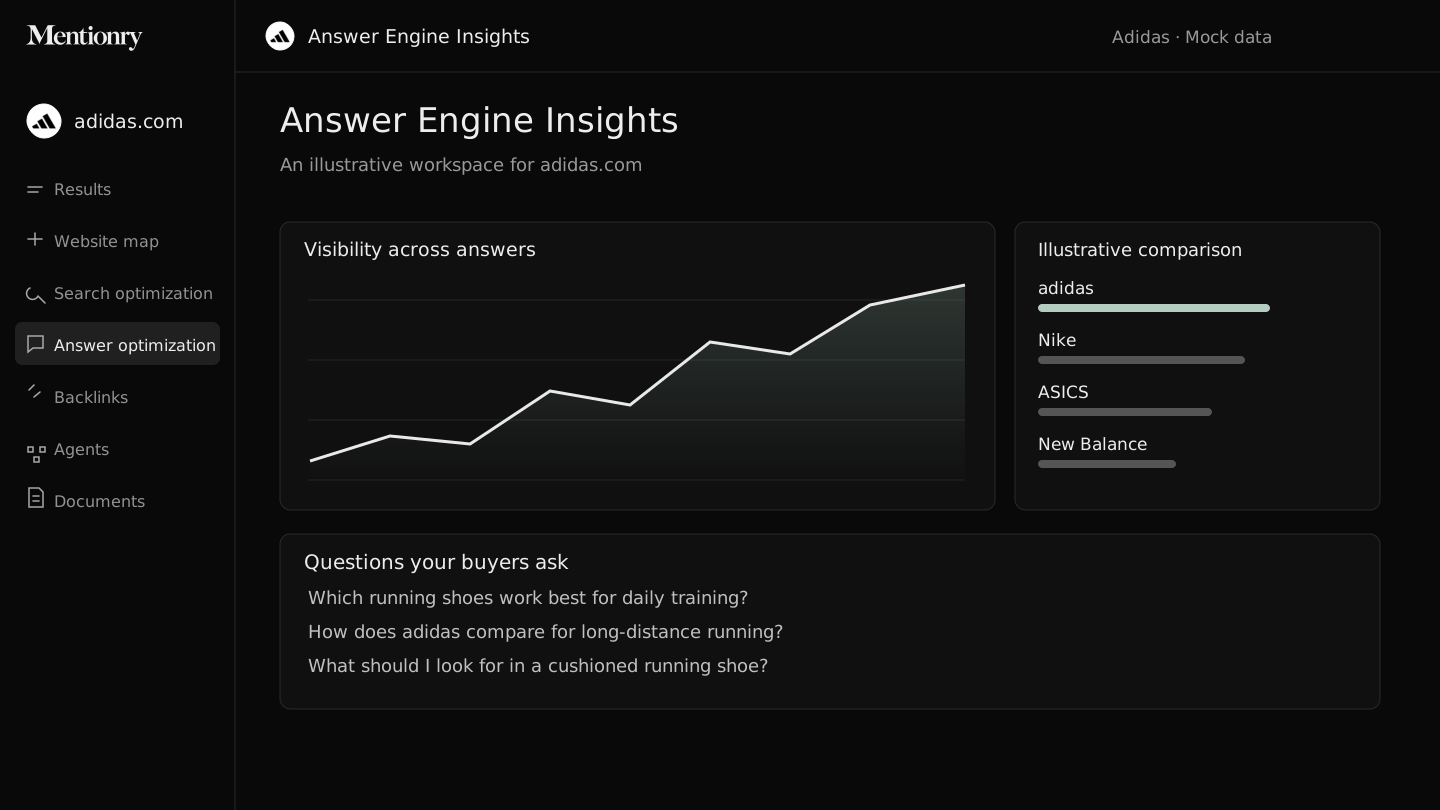
Mentionry helps retail teams inspect recorded brand mentions, cited sources and product-name matches in a selected answer-engine sample. Results separates questions that name an owned brand from questions that do not, using literal name matching rather than inferred shopper intent. Shopping requires an authorized Shopify connection and verified imported product sample. It does not currently capture native shopping feeds or attribute purchases and sales.
How it works
The week, in the order it happens. Each step is a screen in the product.
Track purchase questions for your category
Follow selected best-of, comparison and purchase questions in recorded answer-engine samples.
See itInspect recorded product-name matches
Connect a verified Shopify catalog and inspect observed matches in tracked AI answers. Native shopping-feed tracking and verified full-answer matching coverage are not yet available.
See it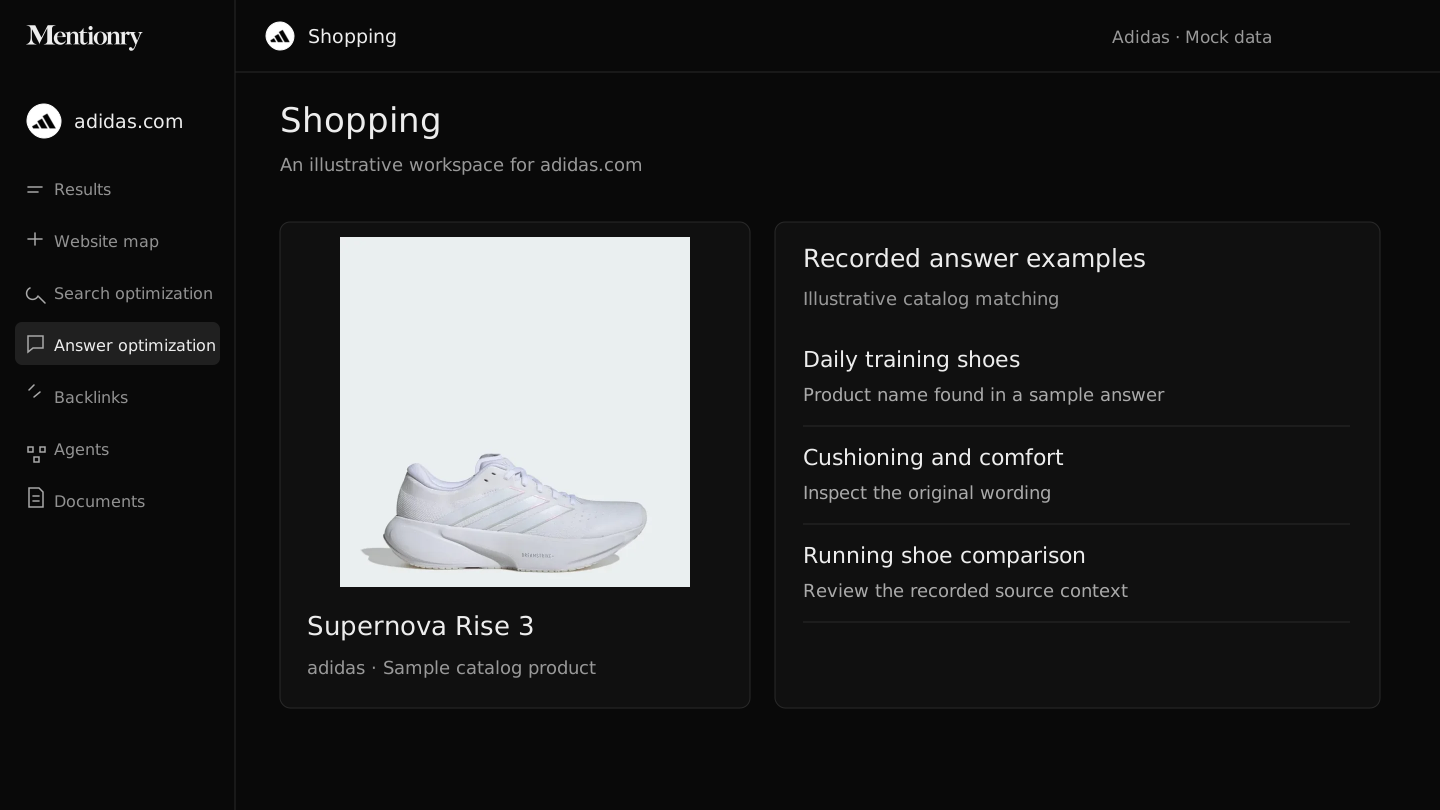
Inspect cited publishers and product pages
Trace recorded citations to the pages behind an answer, then review relevant content or outreach opportunities.
See it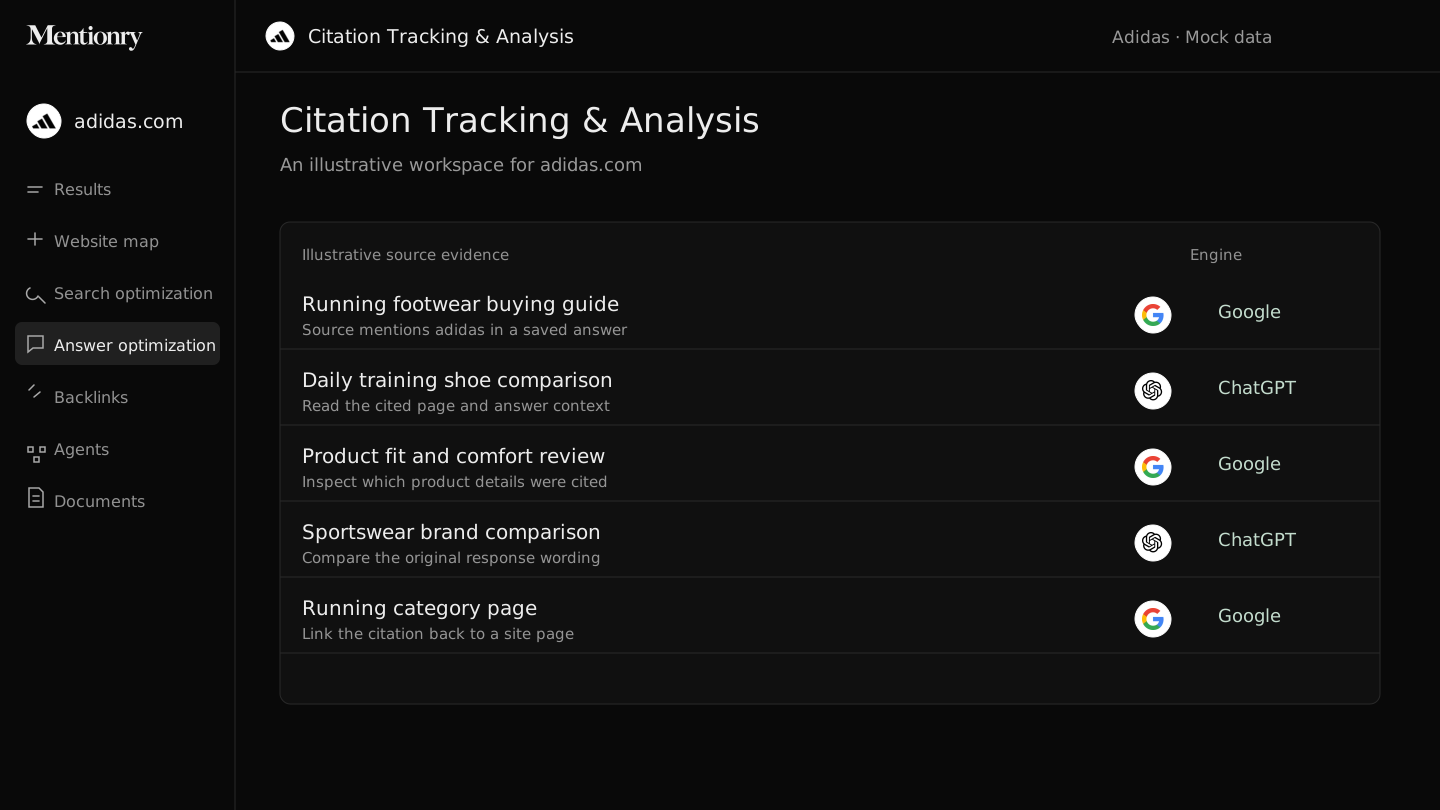
Prepare source-grounded content changes
Use saved brand context and page evidence to prepare changes for editorial review. Publishing requires a real deployment.
See it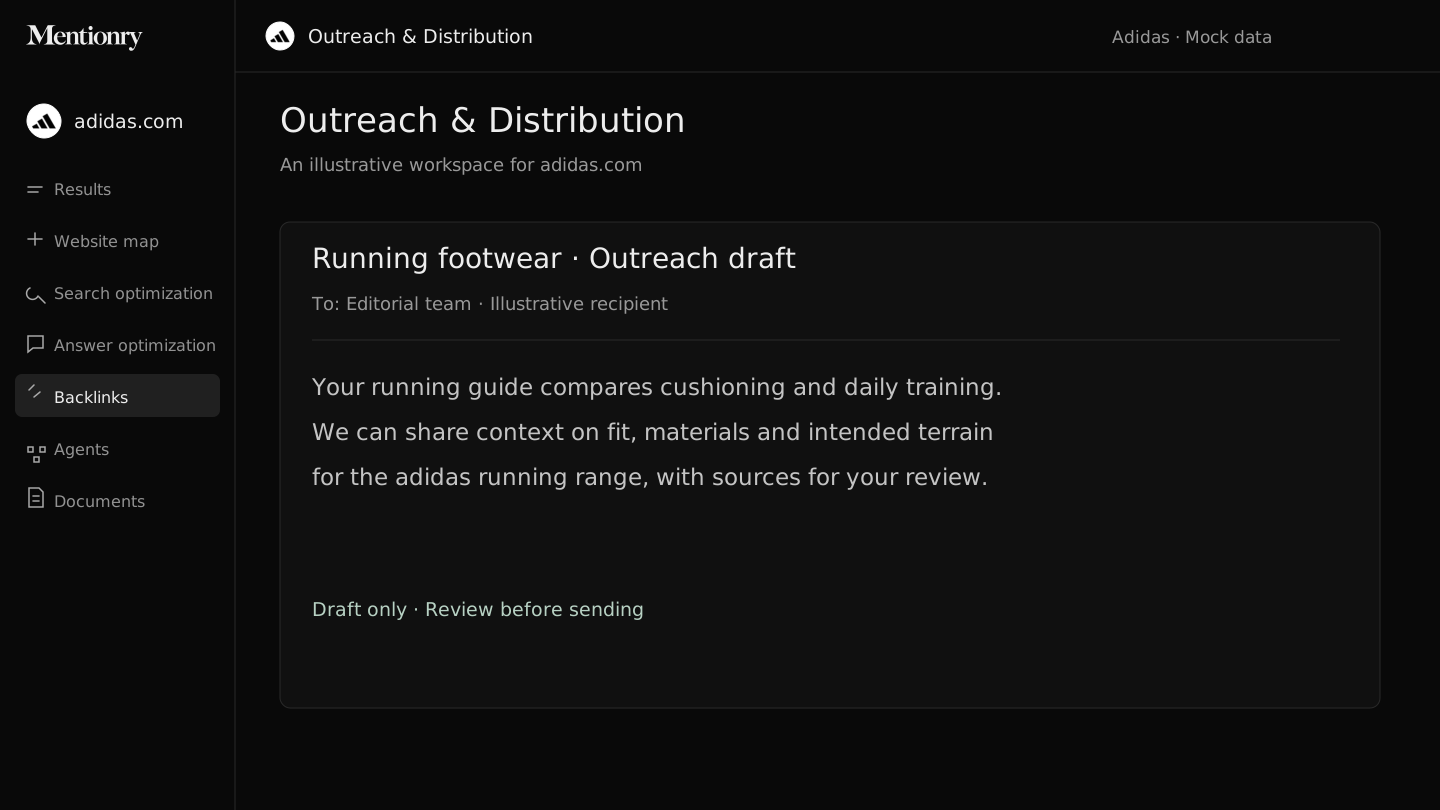
What to expect, and what not to
- Illustrations and saved samples are not customer outcomes or a promise of future performance.
- Shopping currently matches imported product names in saved tracked answers. It does not measure native shopping-feed placement, purchases or sales, and product visibility percentages remain withheld pending verified matching coverage.
Start with the questions and sample you actually measure
A tracked question is a query Mentionry records, not a transcript of every potential customer conversation. Choose category, comparison and purchase questions relevant to the brand, then inspect the saved answers from the engines and observation window available on your plan.
Keep brand-named questions separate from questions without a brand name. A strong answer rate on a question that explicitly mentions your brand is different evidence from being named in an open category question. The split uses literal saved brand names; aliases and implicit references may be missed, so it is not a definitive measure of audience intent or customer acquisition.
Connect products before drawing product conclusions
Open Shopping and authorize Shopify. The platform verifies the owned active connection and saves an imported sample of up to 250 returned products before opening any Shopping tab. Platform selection, an illustrative image or a legacy access flag is insufficient evidence.
The product view shows recorded matched-answer counts and mention order. It withholds product visibility percentages and growth comparisons while per-answer catalog-matching coverage remains unverified. A missing match is unknown coverage, not proof that an engine never mentioned the product.
Trace an answer back to its sources
Inspect the answer and the pages it cites before changing product content. A retailer citation identifies a source used in the answer; it does not prove a checkout destination, referral visit or purchase. Brand rankings in ordinary tracked answers also do not establish native shopping-feed placement.
Use page-level SEO and answer-engine findings to investigate specific content gaps. Review source-grounded prepared changes against the actual product facts, apply the changes through your publishing process, and record a deployment when they are genuinely live. Later observations can be compared cautiously, with consistent questions, dates, engines and markets.
Treat outreach as an opportunity rather than a placement promise
Backlink research can identify relevant publishers and sources, and supported workflows can prepare material for review. A publisher decides whether to link or mention a product. A draft, a sent pitch and a verified acquired backlink are different states and should not be reported interchangeably.
Content improvements and outreach cannot guarantee that an answer engine recommends a brand. Track the evidence, retain failed or unknown observations honestly, and compare outcomes over time before claiming a lift. Purchases and incremental revenue require separate first-party measurement.
Choose a plan against finite research needs
Mentionry offers Lite, Growth and Agency plans plus quoted Enterprise terms. Evaluation access is finite and does not provide an unlimited daily research service. Current prices, collection scope and workspace allowances are shown on Pricing and in the account.
Store authorization is required before catalog access. Native shopping-feed capture, complete catalog coverage and verified product-lift or sales attribution are not current capabilities. A successful authorized store import still needs end-to-end validation; synthetic tests alone cannot establish it.
Questions
It shows the pages the engine cited when it did. Usually one of them is a comparison page the competitor is on and you are not.
Get your brand mentioned by ChatGPT, Gemini and Google AI Overviews
Start with a free snapshot. Choose Lite, Growth, Agency or quoted Enterprise terms for the collection and workspace limits your team needs.