Link building
Backlink Outreach Services
A backlink outreach service sends emails to get links. It does not place them. The difference matters.
- Reading your visibility on daily trainer prompts
- Checking prompt volumes for the topic
- Reading the adidas brand kit and product lines
Across the 14 “best daily trainer” prompts, Nike is named in 88% of answers. adidas is named in 41%. The engines cite Runner’s World and Wirecutter, and you have no page that answers the question.
The topic runs at 5,400 searches a month and is climbing in the assistants. It earns a page of its own.
Your brand kit puts Supernova, not Adizero, in front of everyday runners, so the page leads with the Supernova Rise 3 and keeps Adizero for fast days. Headlines uppercase, adidas lowercase, and the one health claim is the APMA seal it holds. Staged in Documents. Nothing is published.

Run your
Fastest
Everyday.
Thanks to Dreamstrike+ cushioning the Supernova Rise 3 carries the easy miles that make up most of a training week, and keeps Adizero for the days the plan says fast. Nine weeks on our test panel sit behind every pick.
Find your daily trainer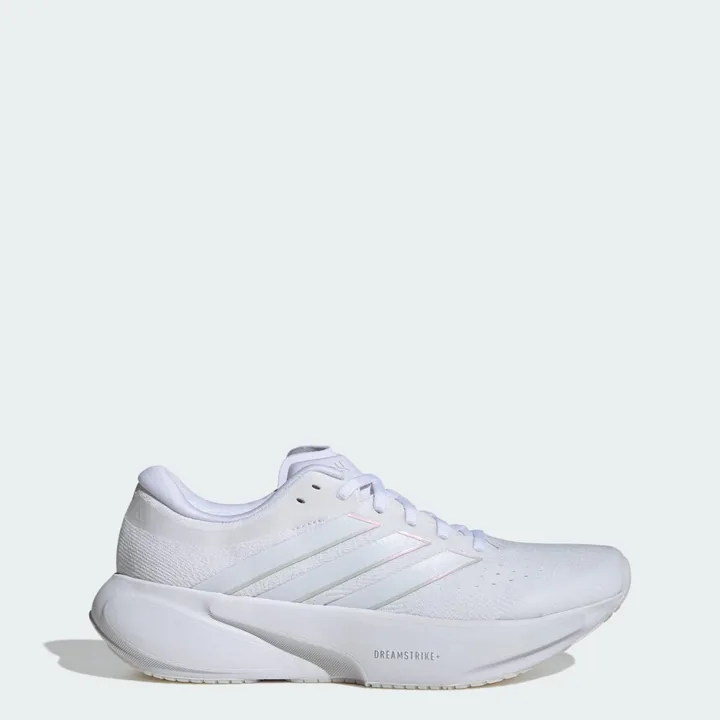
Drafted by your AI Marketer from the Adidas brand kit and product lines. Staged in Documents, not published. Example on the sample account.
Backlink outreach services are vendors that send email pitches on your behalf to try to earn links from other websites, but they do not control whether a link is actually placed or published.
What it refuses to do
It will not find you a paid placement
“This reply asks for payment in exchange for a link. I will not write that response.”
It will not say a page is unlinked when it could not read it
“Unchecked: this page returned 403 and was not read.”
It will not send from a domain of ours
“No mailbox connected. Three drafts are ready and none of them has been sent.”
On this page5 sections
What a backlink outreach service actually does
A backlink outreach service executes the middle step of link building. It finds potential linking pages, identifies a contact, writes a pitch, and sends the email. The service ends when the email is sent. Whether the recipient replies, agrees, and adds a link is a separate event. No ethical service can control that outcome.
This work is often called blogger outreach, digital PR, or link prospecting. The core task is the same: communication aimed at earning a citation. Some services bundle the initial research, the pitching, and the follow-up. Others sell these as separate phases. The common thread is that a human or a machine is sending from an email address on your behalf.
How the market works and what it charges
Most providers sell on a project or retainer basis. A common model is a monthly fee for a promised number of placed links. For example, a vendor might commit to delivering ten dofollow links per month for two thousand dollars. Another might sell a one time campaign targeting fifty prospects for a fixed price.
Prices vary by the perceived difficulty of the niche and the authority of the target sites. Outreach for a legal firm will cost more than for a home decor blog. Some agencies price per hour for the strategist's time, plus a cost per sent email or per secured placement. The most expensive services often include custom content creation, like an infographic or study, to use as the pitch's hook.
The risks and trade offs of outsourcing outreach
The primary risk is that the service violates search engine guidelines. Google's link spam policy prohibits buying or selling links that pass PageRank. If a vendor pays a site owner for a link, or provides a substantial gift in exchange, that link is considered spam. The penalty applies to your site, not the vendor's. You must ask how a provider sources its placements.
A secondary risk is reputation. Outreach emails sent from a vendor's generic address, or from a network of low quality accounts, can damage your brand. Poorly personalized pitches are marked as spam. If the vendor uses templates that hundreds of other clients have used, webmasters recognize them and ignore them. You lose the opportunity and associate your domain with spammy behavior.
The trade off is control. When you outsource, you cede control over the messaging, the timing, and the follow-up. You may not see the list of prospects before they are pitched. You may not approve the email copy. Some services operate as a black box, reporting only on successes. This makes it hard to judge the quality of the targets they pursued and failed to get.
How to judge a backlink outreach provider
Ask for a sample prospect list and the pitch that would be sent. A legitimate service will show you the targets and the proposed email. It should be able to explain why each site is a relevant, editorially justified place for a link to your content.
Ask where the emails come from. The best practice is sending from your domain, using your email infrastructure. This builds your sending reputation and ensures replies come to you. Be wary of services that send from their own domains or third party platforms, as this severs the direct connection between you and the website owner.
Check their policy on paid placements. A provider should explicitly refuse to pay for links. If they are vague or say they 'facilitate partnerships', probe further. The line between a paid sponsorship and a paid link is often thin, and Google's algorithms may not distinguish.
Request a case study with before and after visibility. Look for evidence of organic traffic growth, not just a count of acquired links. A good outcome is a link that sends visitors and fits naturally within the linking page's content.
Where Mentionry fits
Mentionry automates the outreach sending from your own connected mailbox. You give it a domain. It finds specific opportunities where a business like yours could earn a link. It drafts the email, and sends it from your email address. Your domain, your sending reputation, replies land in your thread.
Mentionry is an AI marketing platform. Its Opportunities feature finds places a brand could appear next, like pages that cite competitors but not the brand, journalist requests, podcasts booking guests, conferences taking speakers, and articles that name the brand without a link. Each opportunity is judged individually. The AI Marketer drafts the pitch, and it can refuse, stating when a pitch would be dishonest.
Nothing here is promised. Mentionry sends the pitch. It does not place, publish, or deliver a link. It cannot put a link on somebody else's page, and it will not pay for one. After a pitch is sent, the tool checks back to verify if a link appeared, on which page, and with what anchor text. A link removed later is shown as a change. This reports what was earned, not how many emails were written.
You connect no accounts and supply no API keys to find opportunities. The only connection is your mailbox. Drafts live in your browser. Reply state is read live from your inbox. Paid placements are excluded by design, because buying links that pass ranking signals violates Google's policy and the penalty lands on your site.
Questions people actually ask
Link building services is a broader term that may include creating linkable assets, technical SEO, and relationship management. Outreach services focus specifically on the communication act of asking for a link. Many providers use the terms interchangeably, but the key is to ask what is included. If they only send emails, it is an outreach service. If they also create the content being linked to, it is a fuller link building service.