Link building
Backlink Building Service
A backlink building service finds opportunities for a link and sends the pitch to get it. The market splits into two models: paying for a guaranteed link on a specific domain, or paying for access to a process that might earn one.
- Reading your visibility on daily trainer prompts
- Checking prompt volumes for the topic
- Reading the adidas brand kit and product lines
Across the 14 “best daily trainer” prompts, Nike is named in 88% of answers. adidas is named in 41%. The engines cite Runner’s World and Wirecutter, and you have no page that answers the question.
The topic runs at 5,400 searches a month and is climbing in the assistants. It earns a page of its own.
Your brand kit puts Supernova, not Adizero, in front of everyday runners, so the page leads with the Supernova Rise 3 and keeps Adizero for fast days. Headlines uppercase, adidas lowercase, and the one health claim is the APMA seal it holds. Staged in Documents. Nothing is published.

Run your
Fastest
Everyday.
Thanks to Dreamstrike+ cushioning the Supernova Rise 3 carries the easy miles that make up most of a training week, and keeps Adizero for the days the plan says fast. Nine weeks on our test panel sit behind every pick.
Find your daily trainer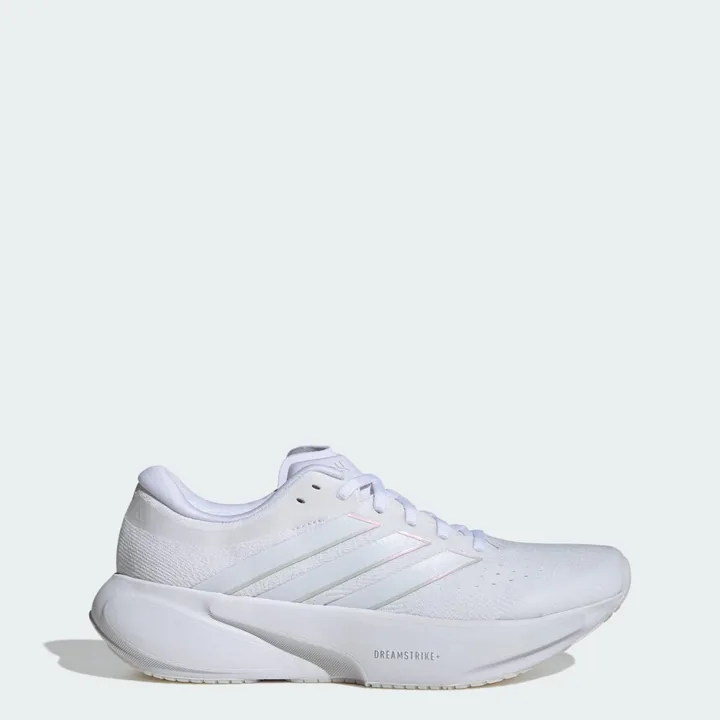
Drafted by your AI Marketer from the Adidas brand kit and product lines. Staged in Documents, not published. Example on the sample account.
A backlink building service is a company or tool that helps you get links from other websites to your own, typically by finding specific opportunities and handling the outreach. Mentionry is the AI marketing platform built for the agentic era: it sees what your customers ask AI, deploys your AI Marketer to find and pitch the opportunities, and measures the results.
What it refuses to do
It will not find you a paid placement
“This reply asks for payment in exchange for a link. I will not write that response.”
It will not say a page is unlinked when it could not read it
“Unchecked: this page returned 403 and was not read.”
It will not send from a domain of ours
“No mailbox connected. Three drafts are ready and none of them has been sent.”
On this page6 sections
What a backlink building service actually does
The core job is to move a link from a state of possibility to a state of existence. This requires two distinct acts: finding a place where a link could honestly go, and persuading the person who controls that place to put it there. The first act is prospecting. The second is outreach.
Most services handle one or the other. Some maintain databases of websites that accept links, often for a fee. Others provide software to manage email campaigns to lists you compile yourself. A few, like Respona, now sell the outcome directly: a guaranteed link on a publisher of a specified Domain Rating, with the anchor text and target URL you choose, for a fixed price per placement.
Mentionry handles the prospecting and the drafting. It finds specific pages that already link to your competitors and not to you. It also finds resource pages, listicles, directories, journalist queries, podcasts, speaking opportunities, awards, and articles that mention your brand without a link. For each, it writes a tailored email, form submission, or reply. The email is sent from your own connected mailbox, using your address and your sending reputation. Replies land in your inbox.
How the market works and what it charges
The pricing models reveal the trade-offs. Pay-per-placement services fix the cost and the outcome. Respona's published pricing starts at $100 for a placement on a publisher with a Domain Rating of 20 or higher, scaling to $500 for a DR 60+ publisher. This includes content creation, outreach, and publishing. The maths is simple: you know the cost and you get the link.
Process-based services charge for access and effort, not the link itself. Backlinker.ai charges $300 per month and guarantees 3 or more links from domains with a DR of 30 or higher, or your money back. Their service works by pitching reporters on platforms like Featured.com and Help a B2B Writer. Featured.com's own Pro plan costs $79 per month, and Help a B2B Writer is free. You are paying for the labour of monitoring those sources and sending the pitches.
The short-term maths for paid placements looks good. For a known cost, you get a link on a domain with a known metric, pointing exactly where you want with your chosen anchor text. This is why the market exists.
The risk in buying links that pass ranking signals
Google's link spam policy is explicit. Exchanging money, goods, services, or free products for a link that passes ranking signals is a violation. The policy names buying links directly. The penalty for violating this policy lands on the site being linked to, not on the seller or the site selling the link.
The compliant alternative is to add a rel="sponsored" or rel="nofollow" attribute to the paid link. These attributes tell search engines not to pass ranking signals through the link. This removes the primary ranking benefit that buyers are paying for. A service that sells placements without adding these attributes is selling a product that violates Google's guidelines.
This is not a minor technicality. A manual action penalty can deindex pages or drop an entire site from search results. Recovery requires removing the problematic links and submitting a reconsideration request. The risk is carried entirely by the customer's site.
How to judge a backlink service provider
First, ask what is being sold. Is it a specific link on a specific page, or is it the work to find and ask for one? If it's the link, ask how the provider ensures compliance with Google's policies. If the answer involves rel="sponsored" or "nofollow", understand that the link will not help your rankings in the way you likely intend.
Second, check what is included in the prospecting. A database of generic sites is low value. Prospecting should be specific to your domain and your competitors. The gold standard is finding pages that already link to your direct competitors but not to you. This is a strong signal of relevance and opportunity.
Third, look at the outreach mechanism. Does the service send emails from its own domain, or from yours? Emails from a vendor's domain are often flagged as promotional. Sending from your own domain protects your reputation and keeps the reply thread in your control. Also, verify that each pitch is judged individually. A service that blasts the same template to hundreds of sites is generating spam, not building relationships.
What Mentionry does differently
Mentionry finds specific places a business could earn a citation or link, and drafts the outreach to send. You add your domain. It identifies competitors, then finds opportunities through its AI Marketer. These include pages that link to your competitors and not to you, resource pages, directories, journalist requests for sources, reporters covering the subject, podcasts booking guests, conferences taking speakers, awards taking entries, and articles that name you without linking.
Every opportunity comes with a drafted email, form submission, or reply. The email is sent from your own connected mailbox. Your address, your domain, your sending reputation. Replies land in a thread you own. Mentionry sends, but it never places or publishes anything. It cannot put a link on somebody else's page, and it will not pay for one. Sending a pitch and placing a link are different acts.
The filtering is the product. In a measured run for one domain, Mentionry found 110 openings, judged 40 as viable, and kept 14 after a final review. The model judging opportunities is allowed to say "this business cannot honestly answer this query", and it does. The drafting also refuses. Given a reply asking for payment for a link, it declines and explains why.
After a pitch is sent, Mentionry verifies the result. Every opening that was pitched is checked back to see if a link appeared, on which page, with what anchor, and whether it is still there. A link removed or turned nofollow later shows as a change in the report. This is how the product reports what it earned, not how many emails were written.
What is not built and never implied
Mentionry does not maintain registries or datasets of linkable sites. It does not do broken link building. It does not inventory relationships with vendors, partners, or customers. It does not audit anchor text.
It also does not automatically pull in queries from HARO, Source of Sources, or Connectively. All three of those platforms work, and none is automatic. HARO emails its queries to subscribed sources for free. Mentionry does not read your mailbox or log into those platforms. You can paste a query from any of them into Mentionry, and it will be judged and drafted like any other opening.
The AI answer visibility channel covers Google AI Overviews only. Mentionry does not claim visibility in ChatGPT or Perplexity.
Nothing here is promised. A competitor might guarantee a specific number of links per month. Mentionry does not. It provides a process to find and pitch for opportunities. Whether a link then appears is somebody else's decision.
Questions people actually ask
An SEO agency typically handles a broad range of tasks including technical SEO, content, and link building. A backlink building service focuses specifically on acquiring links. Some services are tools you operate yourself, like Mentionry. Others are done-for-you operations where the vendor manages the outreach, like Backlinker.ai. A third type sells the link as a product, like Respona's pay-per-placement model.