AI search
ChatGPT search console
A ChatGPT search console is a report that tells a business how it shows up in ChatGPT: whether it is named, which of its pages are cited, and how that changes over time. This page explains what OpenAI, Google and Bing offer today, what none of them show, and how Mentionry fills the gap with tracked prompts.
- Reading your visibility on daily trainer prompts
- Checking prompt volumes for the topic
- Reading the adidas brand kit and product lines
Across the 14 “best daily trainer” prompts, Nike is named in 88% of answers. adidas is named in 41%. The engines cite Runner’s World and Wirecutter, and you have no page that answers the question.
The topic runs at 5,400 searches a month and is climbing in the assistants. It earns a page of its own.
Your brand kit puts Supernova, not Adizero, in front of everyday runners, so the page leads with the Supernova Rise 3 and keeps Adizero for fast days. Headlines uppercase, adidas lowercase, and the one health claim is the APMA seal it holds. Staged in Documents. Nothing is published.

Run your
Fastest
Everyday.
Thanks to Dreamstrike+ cushioning the Supernova Rise 3 carries the easy miles that make up most of a training week, and keeps Adizero for the days the plan says fast. Nine weeks on our test panel sit behind every pick.
Find your daily trainer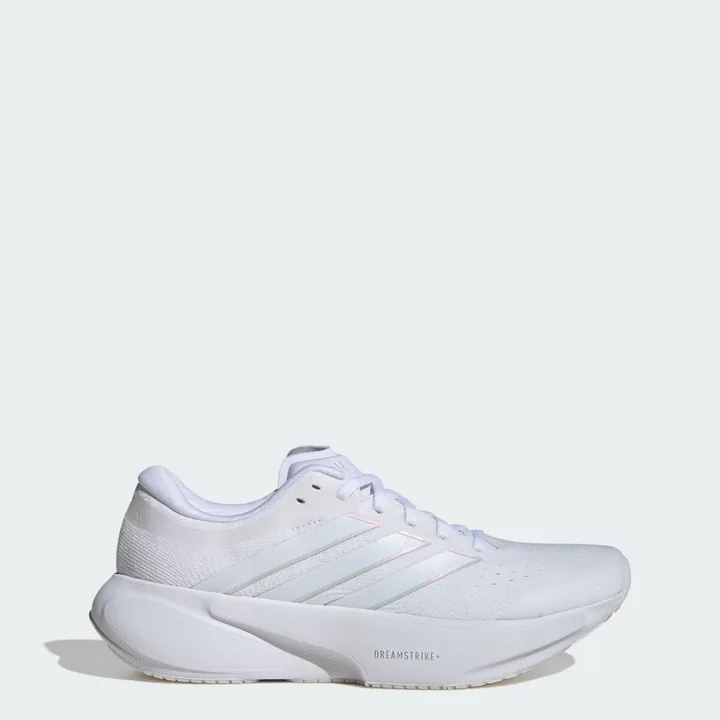
Drafted by your AI Marketer from the Adidas brand kit and product lines. Staged in Documents, not published. Example on the sample account.
As of 7 November 2026 OpenAI has not released a public search console for ChatGPT. A Search Console style tool for verified businesses was reported on 6 November 2026, unconfirmed by OpenAI, showing impressions and clicks but reportedly no prompts and no competitor comparison. Until then, the practical ChatGPT search console is a tracker that asks ChatGPT your buyers' questions every day and keeps the answers, the brands named and the pages cited.
What it records that a console does not
The question, and the answer ChatGPT gave
“Prompt: ‘best tool for X’. Named in 2 of 3 samples, after Competitor A.”
The pages it cited to decide
“Sources cited: your pricing page, two review sites, one competitor blog.”
Whether it can read your site at all
“Your robots.txt disallows OAI-SearchBot. ChatGPT cannot cite this domain.”
On this page7 sections
- 01Is there an OpenAI search console?
- 02What Google Search Console and Bing Webmaster Tools already show
- 03What an AI search console should measure
- 04How Mentionry works as a ChatGPT search console
- 05ChatGPT rank tracking and brand mentions
- 06How it fits beside an official OpenAI console
- 07What Mentionry cannot see
Is there an OpenAI search console?
Not a public one, as of 7 November 2026. OpenAI publishes documentation for its crawlers, OAI-SearchBot for ChatGPT search and GPTBot for training, and it tags referral links from ChatGPT search with utm_source=chatgpt.com so you can see visits in your own analytics. It has not published a console where a site owner can see impressions, queries or rankings inside ChatGPT.
That is likely to change. On 6 November 2026 Search Engine Roundtable reported a screenshot, first shared on LinkedIn, of a ChatGPT banner inviting businesses to claim their business in ChatGPT. The reported tool counts how often a verified business appears in ChatGPT responses and how often people click through to its website, charted daily. Verification reportedly runs through connections such as a Shopify store. OpenAI has not announced it, and details may change before any launch.
What it reportedly does not show matters as much. According to the people who saw it, there is no prompt data, no user data and no competitor benchmark. You would learn that you appeared, but not which questions triggered it, what the answer said about you, or who was named instead of you.
What Google Search Console and Bing Webmaster Tools already show
Google Search Console reports generative AI performance for Google's own surfaces, AI Overviews and AI Mode, as impressions and clicks. It does not cover ChatGPT, Gemini as a separate app, Claude or Perplexity, and it does not show the answer text.
Bing Webmaster Tools added an AI Performance report in public preview in February 2026. It counts how often your pages are used as sources in Microsoft's own AI answers and partner experiences, grouped by grounding query and by page. It has no click data, and it does not report on ChatGPT, even though ChatGPT search has historically drawn on Bing results.
So each first party console describes its owner's surface, in that owner's terms. None of them puts ChatGPT, Gemini, Claude, Perplexity and Google's AI answers side by side for the same question, and none shows which competitor took the answer.
What an AI search console should measure
A Google style console starts from impressions and clicks because a results page is a list of links. An AI answer is different: the answer is the destination, and the links are footnotes. A useful AI search console therefore has to record what was said, not only whether you were there.
- The question: the exact prompt, so a change in visibility can be traced to a change in the answer.
- The answer text: what the engine actually told the buyer, including how it described you.
- Brands named: you and every competitor, in the order they appear.
- Citations: every URL the engine used as a source, yours and everyone else's.
- Fan out queries: the searches the model ran on the way to its answer, which show what it was looking for.
- Crawler access: whether OAI-SearchBot and the other AI crawlers are allowed to read your pages at all.
How Mentionry works as a ChatGPT search console
You write the questions your buyers actually ask. Mentionry puts each one to the answer engines on your plan once a day, three samples a reading, and keeps every result. ChatGPT is on every paid plan. The self-serve plans read ChatGPT, Gemini and Google AI Overviews; Perplexity and Claude can be added on an Enterprise quote.
Each reading stores the answer text, the URLs cited, the brands named and the queries the model searched along the way. From those records Mentionry computes visibility, share of voice and average position, grouped by engine, prompt, topic, day and competitor.
The Pages screen turns the citations into a site report: every page of yours that an engine has cited, the prompts that led to it, and a separate list of pages that have never been cited. The Agent Analytics check reads your robots.txt and reports which AI crawlers, OAI-SearchBot among them, are allowed in, because a site that blocks the crawler cannot be cited by ChatGPT search however good the page is.
On paid plans you can also connect your own Google Search Console property. Mentionry then reads your Google queries, pages, clicks and impressions on a schedule and keeps them beside the AI answers, so Google search performance and AI answer visibility are reviewed in one place without being mixed into one number.
ChatGPT rank tracking and brand mentions
ChatGPT has no fixed rank, because the same question can get a different answer an hour later. That is why each reading takes three samples and why trends matter more than any single day. Visibility is the share of answers that name you. Share of voice compares how often you are named against the competitors in the same answers. Average position is the order in which brands are named.
Two rules keep those numbers honest. A brand that was never mentioned has no average position, rather than a zero that would sort it first. A day when every run failed is shown as a gap in the chart, not as a drop in visibility.
Tracking mentions shows you where you stand. Changing it usually means earning a place on the pages the engines cite. Mentionry lists those cited pages and the openings around them, such as journalist requests, podcasts and resource pages, and drafts the pitch for you to review and send from your own connected mailbox. Whether a page then mentions or links to you is that publisher's decision, and nothing here is promised.
How it fits beside an official OpenAI console
If OpenAI ships the reported tool, use it. First party impressions and clicks from ChatGPT are numbers only OpenAI can see, and no outside tracker can reproduce them.
The two answer different questions. An OpenAI console would tell you how often you appeared and how many people clicked. A tracker tells you which of your buyers' questions you appear for, what ChatGPT said, which competitor was named instead, and which pages it relied on. The first measures the outcome; the second shows what to change.
What Mentionry cannot see
It measures your own tracked prompts, not the world's conversations. It cannot see what other people type into ChatGPT, and it does not estimate how many people asked a question. The Search Demand screen shows Google keyword volume and a separately labelled, modelled AI search estimate from DataForSEO; neither is a count of real ChatGPT prompts.
It does not have ChatGPT impressions or click counts. Those exist only inside OpenAI. Visits from ChatGPT appear in your own analytics under utm_source=chatgpt.com.
Recording starts the day a prompt is added. There is no backfill, because the answer text and the competitors inside it exist only if they were captured at the time.
It does not run on Microsoft Copilot, Grok or DeepSeek today, and it does not track them.
Questions people actually ask
Not a public one as of 7 November 2026. A Search Console style tool for verified businesses was reported on 6 November 2026, showing how often a business appears in ChatGPT responses and how many people click through. OpenAI has not announced it, and it reportedly shows no prompt data and no competitor comparison.