Link building
Link Builder Services
Link building services find and acquire backlinks to improve a site's search rankings. The market is split between manual outreach, automated placement, and software that assists you.
- Reading your visibility on daily trainer prompts
- Checking prompt volumes for the topic
- Reading the adidas brand kit and product lines
Across the 14 “best daily trainer” prompts, Nike is named in 88% of answers. adidas is named in 41%. The engines cite Runner’s World and Wirecutter, and you have no page that answers the question.
The topic runs at 5,400 searches a month and is climbing in the assistants. It earns a page of its own.
Your brand kit puts Supernova, not Adizero, in front of everyday runners, so the page leads with the Supernova Rise 3 and keeps Adizero for fast days. Headlines uppercase, adidas lowercase, and the one health claim is the APMA seal it holds. Staged in Documents. Nothing is published.

Run your
Fastest
Everyday.
Thanks to Dreamstrike+ cushioning the Supernova Rise 3 carries the easy miles that make up most of a training week, and keeps Adizero for the days the plan says fast. Nine weeks on our test panel sit behind every pick.
Find your daily trainer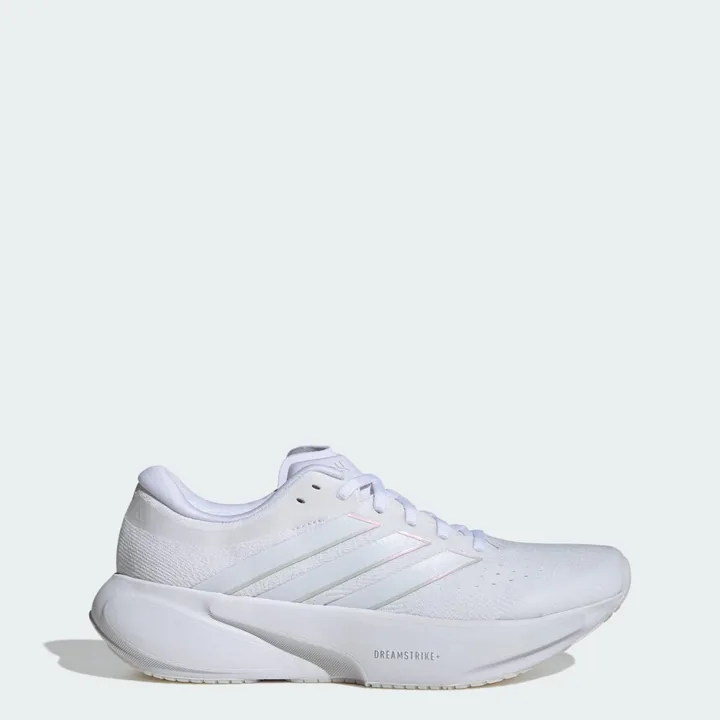
Drafted by your AI Marketer from the Adidas brand kit and product lines. Staged in Documents, not published. Example on the sample account.
Link builder services are vendors that find and acquire backlinks from other websites to improve your site's search engine rankings, typically operating through manual outreach, automated placement networks, or software that assists you in doing the outreach yourself.
What it refuses to do
It will not find you a paid placement
“This reply asks for payment in exchange for a link. I will not write that response.”
It will not say a page is unlinked when it could not read it
“Unchecked: this page returned 403 and was not read.”
It will not send from a domain of ours
“No mailbox connected. Three drafts are ready and none of them has been sent.”
On this page6 sections
What link building services actually sell
A link building service sells the labour and tools to get links from other sites to yours. The core offer is the placement of a backlink, which is a hyperlink on an external page pointing to your domain. This is done to pass ranking signals, increase referral traffic, or build brand visibility.
The market breaks into three clear models. The first is manual outreach, where an agency or freelancer researches prospects, writes personalised emails, and negotiates for a link. The second is automated placement, where a vendor uses a network of owned or partner sites to insert links, often sold in packages. The third is software, which provides tools for finding opportunities and managing outreach but leaves the sending and negotiation to you.
How the market charges and what you get
Pricing follows the model. Manual outreach agencies typically charge a monthly retainer, from a few hundred to several thousand dollars, for a promised number of placed links or a set amount of work. Automated placement services often sell fixed packages, like 10 links for $500, with the link details provided after purchase. Software tools charge a monthly subscription for access to their prospecting and outreach platform.
You can check these prices on any vendor's public website. The key distinction is what is being sold. Agencies sell a result, the link. Software sells a process, the tools to find and pitch. The automated networks sell an inventory, the slots on pages they control. The risk and reward differ with each.
The risks and trade-offs of each approach
Every model carries a trade-off between control, cost, and risk. Manual outreach has high labour cost and variable results. Nothing is promised, but the links tend to be from more relevant, higher-quality sources because a human judged the fit. The risk is paying for work that yields few links.
Automated placement networks offer predictability and lower cost per link. The risk is that these links often come from low-quality directories, sponsored post networks, or private blog networks. Buying links that pass ranking signals violates Google's link spam policy. The penalty for violating this policy lands on your site, not the vendor's. A link removed or devalued later offers no lasting value.
Software gives you control and avoids the policy risk, as you send pitches yourself. The trade-off is your own time spent judging opportunities, writing emails, and managing follow-ups. The tool provides the list, but you do the work.
How to judge a link building provider
Look for concrete, checkable facts, not vague promises. A credible provider will show examples of placed links, name the sites they came from, and explain why the link was earned. They will have a public portfolio or case studies with real domains you can visit.
Ask how they find opportunities. Do they use a spammy directory, or do they research your niche? Ask who sends the pitch. Is it from a generic agency address, or from your own domain? Check what they commit to. Do they promise a specific number of links, or do they commit to a volume of outreach? A promise of specific placements often indicates an automated network.
The most important question is about link removal. If a link is removed or turned nofollow a month after placement, does the provider report this change? Most do not. Their scoreboard shows the link at the moment of placement and never updates.
What Mentionry does differently
Mentionry is an AI marketing platform. It finds the specific places your brand could appear next, like pages that cite your competitors but not you, or journalist requests that match your expertise. It drafts the pitch you send to get a citation. You give it your domain. It works out who you compete with, then records what answer engines say about you and them. The Opportunities section lists places to earn a mention, from podcasts booking guests to articles that name you without a link.
Every opportunity comes with a drafted email, form submission, or reply. The email is sent from your own connected mailbox. Your address, your domain, your sending reputation. Replies land in a thread you own. Nothing here is promised. Mentionry sends the pitch, but it cannot place or publish a link on somebody else's page. Sending and placing are different acts.
The product is built on filtering, not volume. On a measured run for one domain, it found 110 openings, judged 40 as viable, and kept 14 after a final check. The drafting model can refuse, stating when a business cannot honestly answer a query. Given a reply asking for payment for a link, it declines and explains why. After a pitch is sent, Mentionry checks back to verify if a link appeared, on which page, and with what anchor. A link removed later shows as a change on your dashboard. This reports what was earned, not just what was sent.
What is not built into Mentionry
Mentionry does not maintain registries or datasets of sites that sell links. It does not do broken link building. It does not inventory your relationships with vendors or customers. It does not audit your anchor text. It is not a replacement for services like HARO.
Helpareporter.com, Source of Sources, and Connectively all work, and none are automatic. Mentionry does not read your mailbox or log into those platforms. You can paste a query from them into Mentionry, and it will be judged and drafted like any other opening. The AI answer visibility channel covers Google AI Overviews only, not ChatGPT or Perplexity.
Questions people actually ask
Vendors use different language. Some promise or commit to a specific number of links, often sold in packages. Others sell a monthly retainer for work performed, not for specific placements. Mentionry does not operate this way. It provides the tools to find and pitch for links, but the outcome of any pitch is someone else's decision. Nothing here is promised.