Solutions
For content teams
Automate the optimization of existing content and create net new content faster. Save time and resources, generate better content, increase brand visibility.
Content optimization for AI search means writing pages that answer engines like ChatGPT and Google AI Overviews will read and cite. Mentionry shows you which of your pages those engines already open, what they quote from them, and the exact questions with real demand behind them, so your team can craft AI optimized content in seconds.
How it works
The week, in the order it happens. Each step is a screen in the product.
Build a data backed content strategy
Surface citations, competitive analysis and the questions with demand behind them.
See itThoughtfully architected content
Briefs built from the top-cited pages on a topic, in your voice, from your brand kit.
See it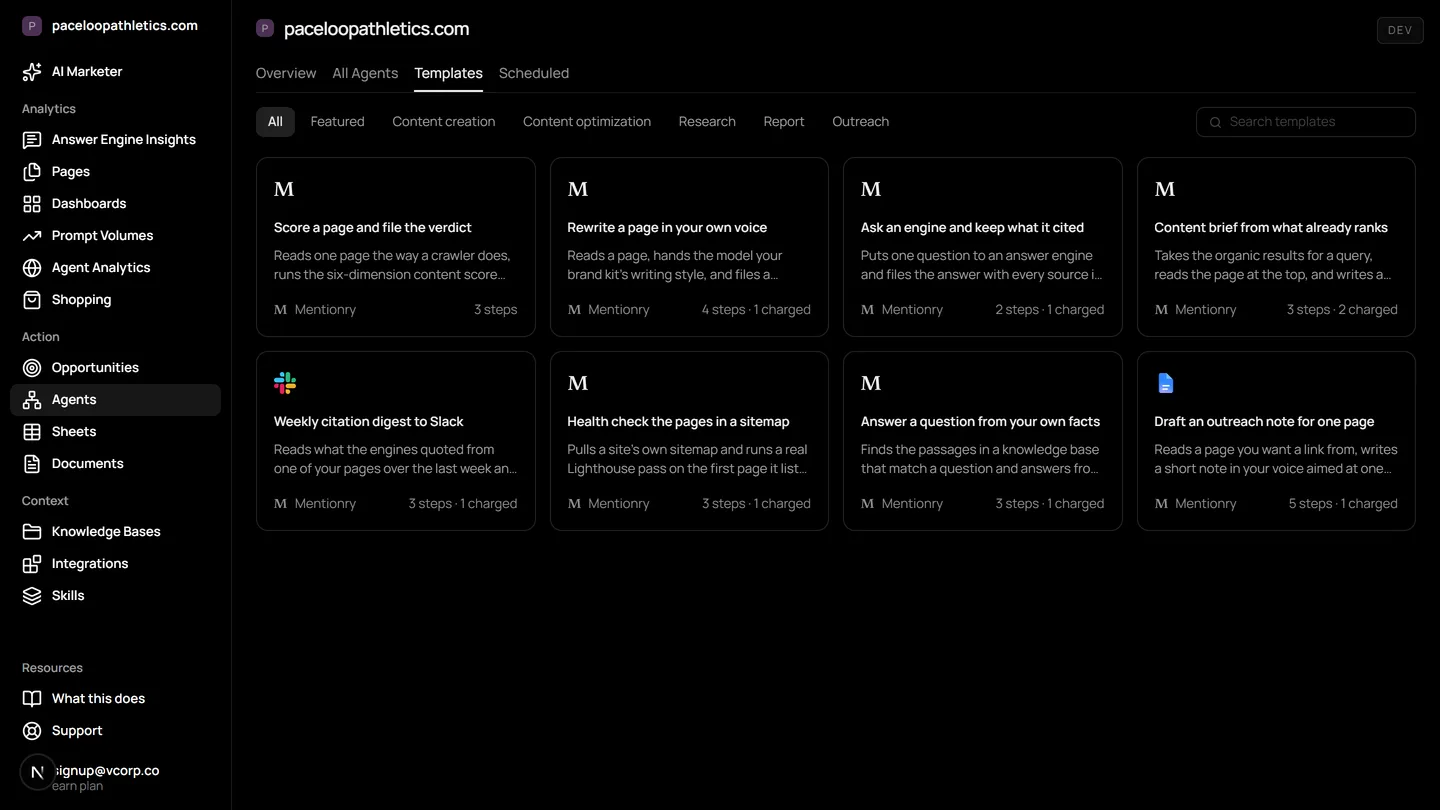
Optimize your existing content for AEO
Score a draft against what the engines quote, rewrite it in your voice, file it to Documents or Google Docs.
See it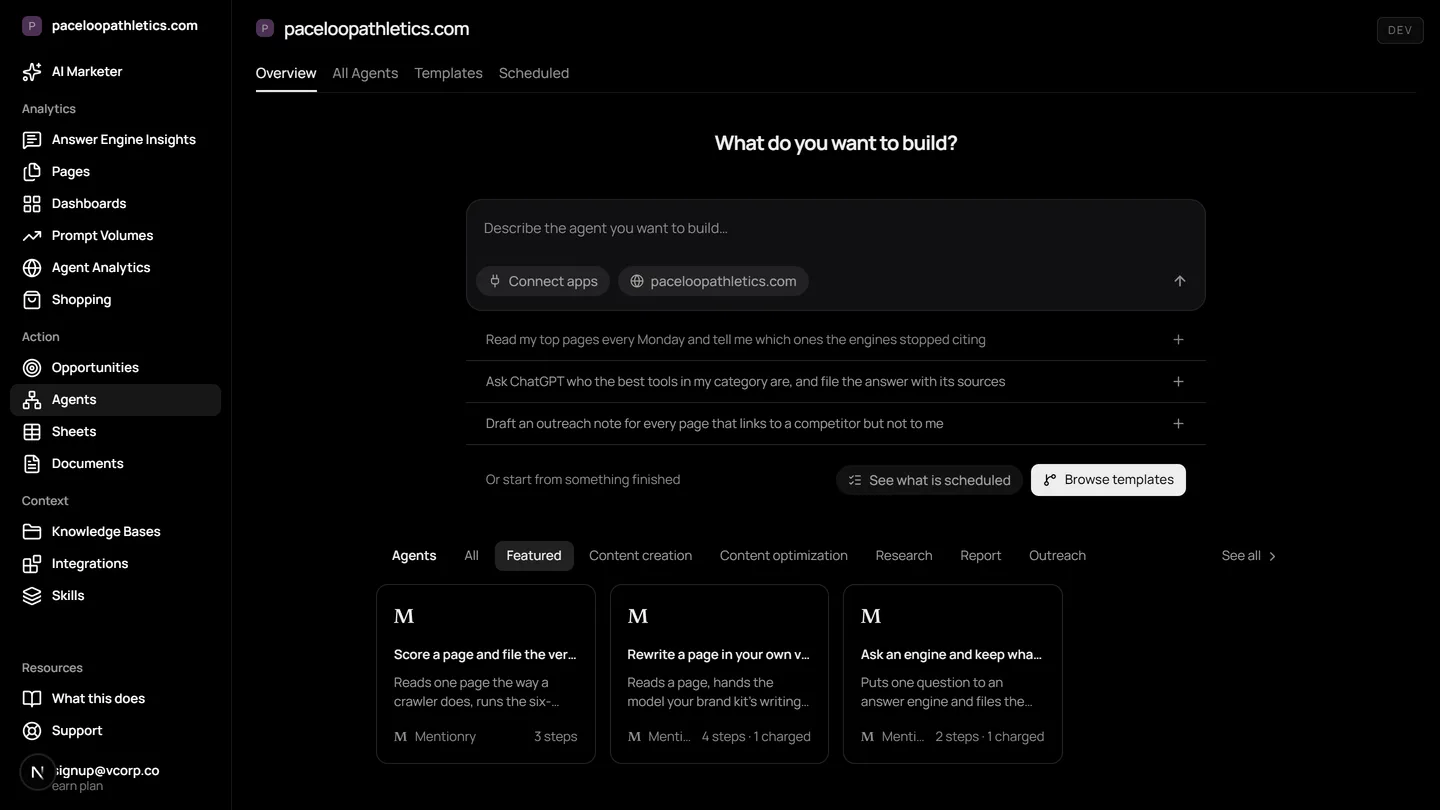
Track the result
Pin the new URL and see the day it is first cited, on which prompt, by which engine.
See it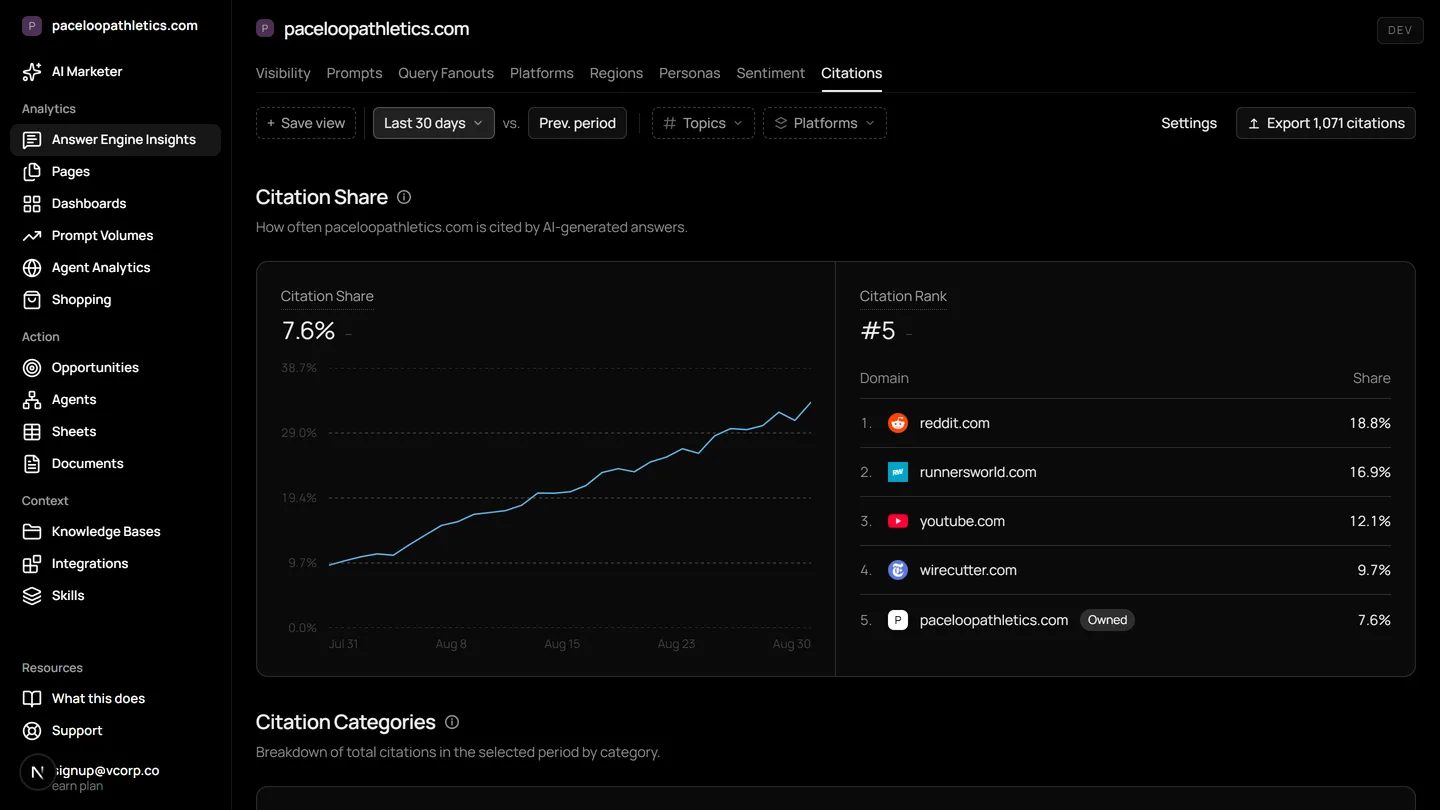
What to expect, and what not to
- Agents write drafts and briefs; nothing publishes to a CMS. A person reads every document before it goes anywhere.
- The canvas for building new agent chains is not there yet. Templates cover the recurring jobs and are copied and edited.
The new content brief is an AI citation
The job changed when buyers stopped scrolling through ten blue links. Now they ask ChatGPT, Gemini, or Google AI Overviews what to buy. Your success is measured by whether those engines read and cite your pages. The problem is you cannot see what they are reading. You do not know which of your existing pages they open, what text they quote, or which questions have real volume behind them. You are writing in the dark, hoping for a citation.
Content optimization for AI search requires a different brief. It is not about keyword density or meta tags. It is about answering the specific, often long form questions that people are putting into answer engines. Your strategy needs to be built from the data of what these models actually consume and reference.
A week of content optimization for AI search
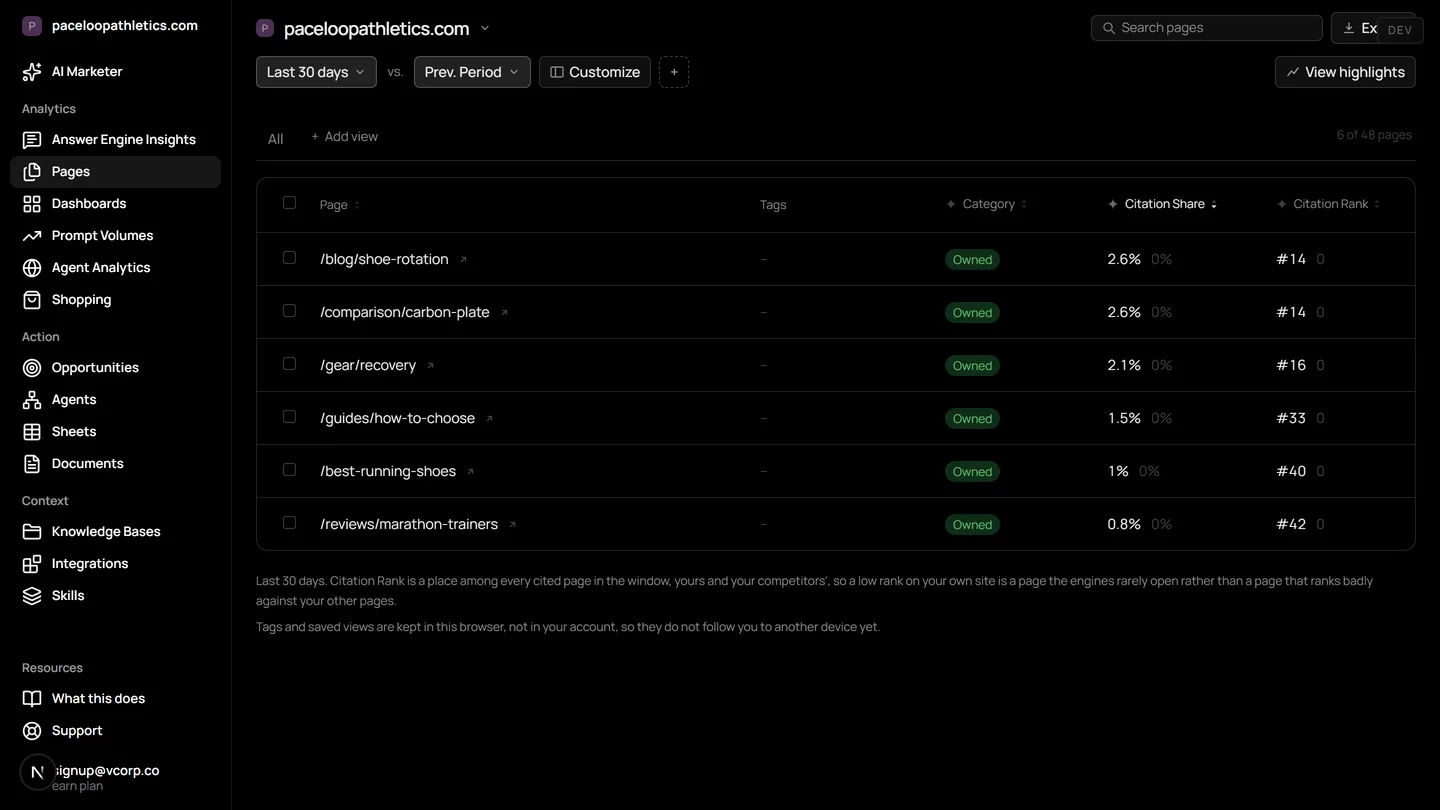
Your week starts in the Pages screen. Here you surface citations. You see which of your pages the engines opened yesterday, which they cited, and what they quoted. You see a competitive analysis, listing the pages your competitors got cited on for the same topics. Alongside this, Prompt Volumes shows you the questions with genuine search demand behind them. This is your data backed content strategy.
Next, you use Agent templates for thoughtfully architected content. You select a template for a content brief. It pulls from the top cited pages on your chosen topic, analyses their structure and tone, and builds a new brief in your brand's voice, sourced from your brand kit. The brief includes target prompts, key citations to include, and a suggested outline.
For older posts, you run an Optimize for AEO agent. You paste in a draft URL or text. The agent scores it against what the engines typically quote on that topic. It then suggests rewrites for specific sections, ensuring the content is helpful and citable, all while maintaining your voice. The final draft is filed to your Documents or directly to a connected Google Doc.
You finish the week in Citation Tracking & Analysis. You pin the URL of the newly published or optimized piece. Every day, Mentionry checks if it has been cited. You see the day it is first referenced, on which specific tracked prompt, and by which engine, like Perplexity or Claude. The loop from insight to creation to measurement is closed.
What to measure and report
For content teams, traditional SEO metrics are no longer the full story. You need to report on AI visibility. The metrics that matter are directly tied to whether your content is being read and referenced by the models your audience uses.
These metrics live in your Mentionry dashboards. You can show a boss or client the Visibility Score trend over time, demonstrating that your content is getting your brand named more often. You can report that your Share of Voice is increasing against key competitors. Most powerfully, you can show a report listing new pages published and the exact day each one received its first AI citation, directly linking your work to a tangible result.
- Visibility Score: How often your brand is named in answer engine responses to your tracked prompts.
- Share of Voice: Your brand's mentions as a percentage of all named competitors in those same answers.
- Citation Mix: The split between citations from your owned domains, your operated profiles, and earned mentions from other publishers.
- New Citation Alerts: The date and source of the first citation for any pinned URL, proving the ROI of a content piece.
Openings and drafts for your content team
Opportunities for a content team come from the Opportunities screen. It lists pages that cite your competitors but not you, articles that name your brand without a link, and publications with contributor programmes. Each is judged for fit. For a content team, the most relevant openings are those where you can honestly provide expertise.
When you claim an opportunity, the AI Marketer drafts the pitch. It reads the publication, the topic, and your brand kit to write a personalised outreach email. You approve the draft in the Desk, and it sends from your own connected mailbox. The AI Marketer can also draft the full article or response once the pitch is accepted, based on the brief it generates from top cited pages.
What to expect and what not to
Expect agents that write drafts, briefs, and optimization suggestions. Expect to see which of your pages the engines read and what they quote. Expect to track the first citation of any new content you publish. Do not expect Mentionry to publish anything to your CMS. A person reads and approves every document before it goes live.
The canvas for building brand new agent chains from individual steps is not there yet. You work from templates that cover the recurring jobs, like creating a brief or optimizing a post. You copy these templates and edit their steps to match your workflow. Video generation is for short clips up to eight seconds, not for editing long form content. Prompt Volumes provides estimates from search data, not a live panel of assistant users.
How a content team buys Mentionry
Start with the free seven day trial on your own website. No credit card is needed. It runs 50 prompts a day through ChatGPT, Gemini, and Google AI Overviews. Recording begins the day you add your prompts, there is no historical backfill. If it works for your workflow, the Starter plan is $99 a month. This continues your access to those three engines, supports one brand, and includes 100 agent runs a month.
Larger content teams, or agencies managing content for multiple clients, will need an Enterprise plan. This is quoted based on your needs, with access to more engines like Claude and Perplexity, more prompts per day, and support for multiple brands and regions under one login. You never pay for a link or a placement, only for the platform that shows you the openings and helps you draft the response.
Questions
It writes briefs, rewrites and drafts from your brand kit and the pages that already win, and files them where you edit and approve.
Get your brand mentioned by ChatGPT, Gemini and Google AI Overviews
Reach millions of consumers who are using AI to discover new products and brands. The first 7 days are free and take no card. Starter is $99 a month; Enterprise is tailored.