Link building
Backlink Sites
A search for backlink sites leads to a market of paid placements, free lists, and outreach services. Here is what each one does and where the penalty lands.
- Reading your visibility on daily trainer prompts
- Checking prompt volumes for the topic
- Reading the adidas brand kit and product lines
Across the 14 “best daily trainer” prompts, Nike is named in 88% of answers. adidas is named in 41%. The engines cite Runner’s World and Wirecutter, and you have no page that answers the question.
The topic runs at 5,400 searches a month and is climbing in the assistants. It earns a page of its own.
Your brand kit puts Supernova, not Adizero, in front of everyday runners, so the page leads with the Supernova Rise 3 and keeps Adizero for fast days. Headlines uppercase, adidas lowercase, and the one health claim is the APMA seal it holds. Staged in Documents. Nothing is published.

Run your
Fastest
Everyday.
Thanks to Dreamstrike+ cushioning the Supernova Rise 3 carries the easy miles that make up most of a training week, and keeps Adizero for the days the plan says fast. Nine weeks on our test panel sit behind every pick.
Find your daily trainer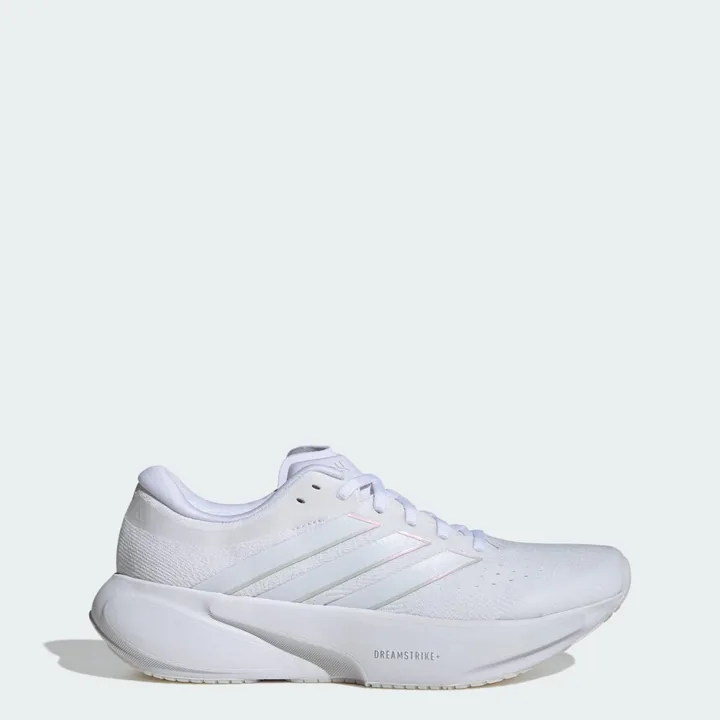
Drafted by your AI Marketer from the Adidas brand kit and product lines. Staged in Documents, not published. Example on the sample account.
Backlink sites are pages where you can get a link to your website, and they fall into three categories: directories and free submission pages you can list yourself on, publications that sell links or articles directly, and platforms that send pitches for you to journalists and bloggers who might link.
What it refuses to do
It will not find you a paid placement
“This reply asks for payment in exchange for a link. I will not write that response.”
It will not say a page is unlinked when it could not read it
“Unchecked: this page returned 403 and was not read.”
It will not send from a domain of ours
“No mailbox connected. Three drafts are ready and none of them has been sent.”
On this page6 sections
What a backlink site actually is
A backlink site is any webpage that can host a link pointing to your domain. This includes business directories, resource lists in a niche, industry awards pages, news sites that quote sources, blogs that review products, and podcast show notes. The common thread is an editor or site owner who decides what gets linked.
The market around this concept has three distinct layers. The first is the page itself, which may be free to submit to or may charge a fee. The second is the service that finds these pages for you. The third is the service that does the outreach or even guarantees the link placement. Most searches for backlink sites mix these layers together.
What the market sells and how it works
Vendors typically sell one of two things: access to a list of sites, or the link placement itself. List services, often presented as free backlink sites, compile directories, web 2.0 platforms, and profile pages. The value is in the aggregation, not the quality. Placement services operate differently. They charge a fee to secure a link on a specific type of site, usually with a promise about the site's authority.
Respona, for example, sells placements outright. Their published pricing starts at $100 for a link on a site with a Domain Rating of 20 or higher, and goes up to $500 for a DR 60+ site. This fee includes writing the content, outreach, and publishing, with the client choosing the anchor text and target URL. The guarantee is for the placement, not the traffic or ranking effect.
Other services, like Backlinker.ai, sell a monthly subscription that guarantees a number of links. Their Standard plan costs $300 per month for three or more links from sites with DR 30 or higher, with a money-back guarantee. They operate by pitching journalists on platforms like Featured.com and Help a B2B Writer on the client's behalf.
The risk in buying a link that passes ranking signals
Google's link spam policy is explicit. Exchanging money, goods, or services for a link that passes PageRank is a violation. The policy exists because treating links as a currency corrupts search results. The penalty for this violation is applied to the site receiving the link, not the site selling it. A manual action can drop a site's rankings or remove it from search results entirely.
The compliant alternative is to add a rel="sponsored" or rel="nofollow" attribute to the paid link. This tells Google not to count the link as an endorsement. For the buyer, this removes the primary ranking benefit they are paying for. The short term maths can look compelling: a few hundred dollars for a link on a strong site might seem to beat months of outreach. The long term risk is the loss of organic traffic from a penalty.
This is why some services frame their offering as 'digital PR' or 'guaranteed publicity'. The link is presented as a byproduct of a published article or mention. The client's control over the anchor text and target URL, however, is often what defines it as a paid placement in Google's view.
How to judge a backlink provider
First, distinguish between a list and a service. A list of free backlink sites is a research tool. A service that does outreach or guarantees placements is an execution partner. Check what is actually being sold. If it's a placement, ask who owns the site where the link will appear. If the vendor owns the network of sites, that is a private blog network, which carries its own set of risks.
Second, examine the guarantee. A guarantee of delivery means the link will be placed on a page. It does not guarantee the link will stay there, that the page will rank, or that Google will count the link. A money-back guarantee for undelivered links shifts the financial risk but not the compliance risk.
Third, look for transparency in sources. Backlinker.ai states it works through platforms like Featured.com. Featured.com's own Pro plan is $79 per month. This reveals the service's margin and sourcing. Knowing where your pitch is going matters, especially if the quote attributed to you is written by an AI model, as Backlinker.ai's examples show.
What Mentionry does instead
Mentionry finds specific, individual opportunities for a business to earn a citation and writes the pitch to send. It does not sell lists, own any websites, or guarantee placements. You give it your domain. It finds pages that link to your competitors but not to you, resource pages, journalists asking for sources, podcasts booking guests, and articles answer engines might read. Every opportunity is judged for fit, and many are rejected as unsuitable.
The drafting happens in your browser. The email is sent from your own connected mailbox, using your address and your sending reputation. Replies land in your inbox. Mentionry checks back on every pitch to see if a link appeared, on which page, and with what anchor text. If a link is later removed or tagged nofollow, that change is reported. This measures what was earned, not just what was sent.
The distinction is fundamental. Mentionry sends the pitch. It never places or publishes the link. Placing a link on someone else's page is a different act, and only one of them is on offer. This approach avoids the policy violation because you are not paying for the link. You are paying for software that identifies a chance to ask for one, and helps you ask well.
What is not built here
Mentionry is not a registry of sites. It does not do broken link building or maintain a relationship inventory. It does not pull queries automatically from HARO, Source of Sources, or Connectively. Those platforms work, and they are not blocked. You can paste a query from them into Mentionry to be judged and drafted like any other opportunity.
It does not audit anchor text or promise visibility in ChatGPT or Perplexity. The AI answer visibility channel covers Google AI Overviews only. It does not use a database of opportunities. Drafts live locally, and reply state is read live from your mailbox. The product is the filtering of prospects, not the volume. In a measured run for one domain, it found 110 openings, judged 40, and kept 14 worth pitching.
Questions people actually ask
Free backlink sites like general directories or profile pages offer a link that is usually easy to get but also low in value. They rarely drive traffic or pass significant ranking authority. Their main use is for brand consistency, ensuring your NAP (Name, Address, Phone) information is listed correctly across the web. For SEO purposes, the time spent submitting to them is often better spent on a single, targeted pitch to a relevant resource page.