Act
Opportunities
The pages, publications, podcasts and threads where your brand could be mentioned, found on a schedule and ranked into a pitch list.
Mentionry shows you how to get cited by ChatGPT and other answer engines by finding specific, actionable opportunities. It scans fifteen channels, from journalist requests to podcasts and awards, judges each one for relevance to your brand, and drafts the outreach. You approve and send from your own mailbox.
Understand and control your AI presence
Opportunities identified proactively
Fifteen channels in one feed: earned media, journalist requests, reporters already covering your subject, podcasts, awards, unlinked mentions and more.
Judged, not scraped
A model reads each candidate and says whether it would plausibly mention you and why, and the reason is kept with the opportunity.
Found on a schedule
The sweep runs for every account on a timer, so the feed is waiting when you open it.
Where it lives in the platform
In the product it is /dashboard/opportunities. On the trial it reads your own site from the first day; on Starter it keeps going, and on Enterprise it runs for every brand you have under one login.
What it means to get cited by chatgpt
When a buyer asks an AI engine like ChatGPT or Google AI Overviews what to buy, the answer is a paragraph with a handful of citations. Being one of those cited brands is the new visibility. It is not about ranking for a keyword, but being named as a good answer to a buyer's question.
This is a different kind of marketing. The goal is to earn a mention in the answer text itself, which often comes from a trusted third party like a review site, a news article, or an expert interview. The process starts with finding those places where a mention is possible.
Why citations matter in ai search
In traditional search, you aimed for the top of ten blue links. In AI search, the answer is a single, consolidated response. If your brand is not cited there, you are effectively invisible for that query, regardless of your website's organic rank.
This shifts the work from technical SEO to digital PR for AI search. You need to be present in the sources these engines read and trust. That means engaging with journalists, podcast hosts, industry publications, and even forums where your expertise can be shared and subsequently cited.
How Mentionry finds opportunities
The Opportunities screen is a feed of places your brand could appear. It runs on a schedule for your account, so the list is fresh when you open it. It reads from fifteen channels, including journalist request services like HARO and Qwoted, podcasts booking guests, conferences taking speakers, awards, publications with contributor programs, and pages that cite your competitors but not you.
Each candidate is judged, not just scraped. A model reads the opportunity, such as a journalist's query, and assesses whether your brand could plausibly be mentioned. It gives a reason, which is kept with the opportunity in the feed. This means you see a pre filtered list of relevant pitches, not a raw dump of leads.
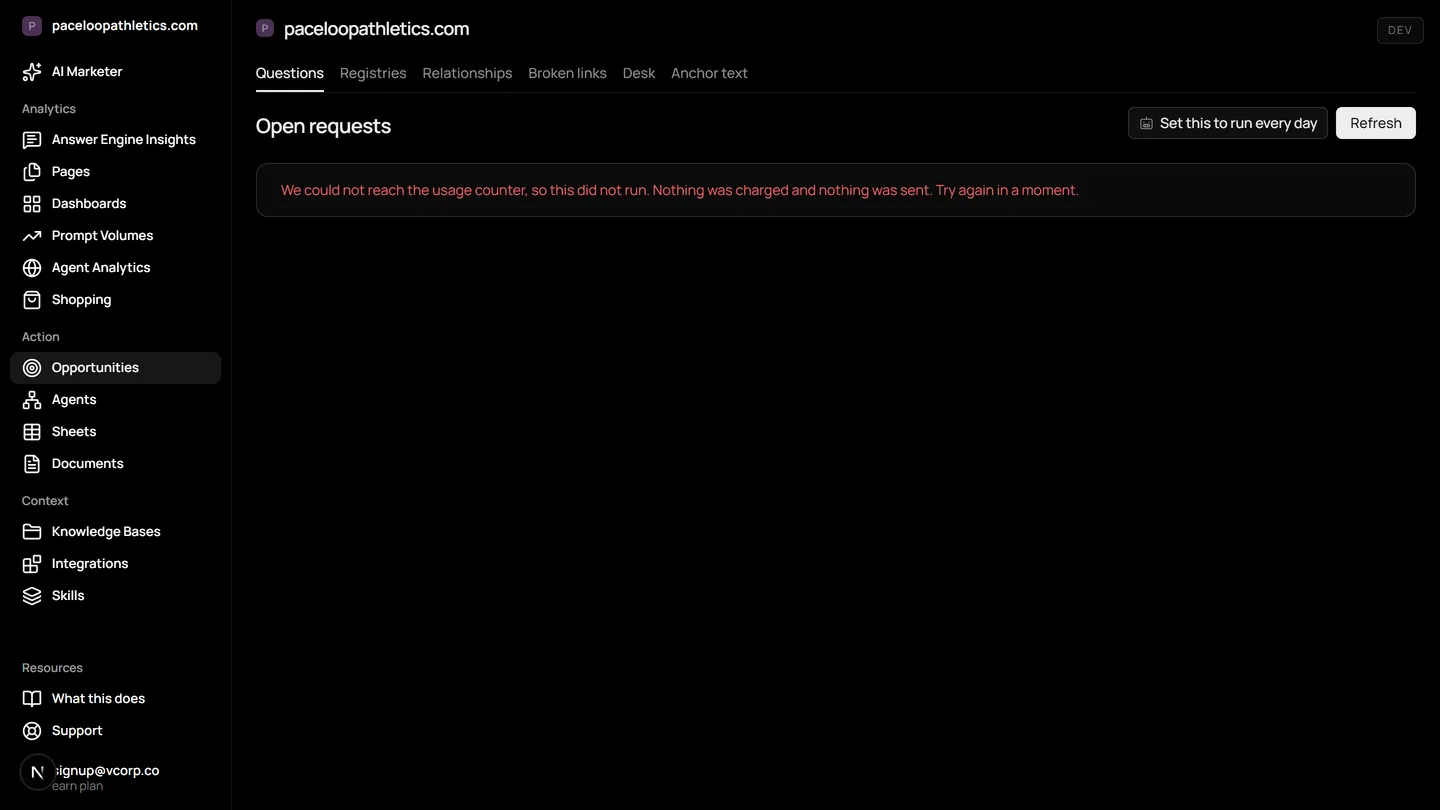
The screen shows each opportunity with its source, a summary, the judgment reason, and a draft pitch. You can filter by channel, relevance, or date found to focus your outreach.
How to use it in your week
A typical workflow starts by opening Opportunities and filtering for 'Journalist Requests'. Look for queries that match your brand's core expertise. Read the drafted pitch, adjust it for a personal touch, and approve the send. The email goes from your connected mailbox, with Mentionry tracking the outreach.
Another workflow is checking for 'Unlinked Mentions'. These are articles that name your brand but do not link to your site. Filter for these, review the context, and use the drafted email to politely ask for a link. This is a direct form of AI search link building, turning a mention into a citable source.
For longer term planning, filter by 'Podcasts' or 'Awards'. The feed will show shows seeking guests in your industry or awards open for entry. These are chances to build authority in spaces that answer engines frequently cite.
How to read the results
Success is measured in your main dashboard's citation metrics over time. An increase in 'earned' citations, which are mentions from third party domains, suggests your outreach is working. A rise in your visibility score for tracked prompts shows you are being named more often in AI answers.
It is important to understand what a change does not mean. A new opportunity appearing does not promise a citation. The publisher makes the final decision. Mentionry does not place, publish, or pay for links. The numbers show potential and effort, not promised outcomes.
The judgment reason attached to each opportunity helps you avoid traps. It explains why the AI thought the opportunity was relevant. If the reason is weak, you can skip it and focus on higher quality leads.
What it does not do
Mentionry's Opportunities feature finds and drafts. It does not buy placements, promise publications, or automatically send emails without your approval. Every outreach requires you to review and confirm the draft.
The feature is live and has no specific limits listed. It works by identifying proactive opportunities, judging them for relevance, and finding them on a schedule. It does not include proactive alerts outside of a scheduled agent, so you will not get an unprompted ping for a sentiment drop. For that, you would set up a monitoring agent.
Plans and access
Opportunities is included on every plan. You can try it free for seven days on the trial, which includes 50 prompts a day put to ChatGPT, Gemini, and Google AI Overviews.
The Starter plan, at $99 a month, includes the feature with 50 prompts, daily readings on those three engines, one brand, and 100 agent runs a month. Enterprise plans are quoted and include more brands, engines like Claude and Perplexity, and higher volumes.
Questions
No. Paid placements are filtered out and the drafting declines to answer a reply that asks for payment.
Get your brand mentioned by the answer engines
Reach millions of consumers who are using AI to discover new products and brands. The first 7 days are free and take no card; Starter is $99 a month after that, and Enterprise is tailored.