بناء الروابط
AI backlinks
An AI backlink tool finds opportunities and writes the pitch. The market is split between software that helps you do it and services that promise to do it for you.
- Reading your visibility on daily trainer prompts
- Checking prompt volumes for the topic
- Reading the adidas brand kit and product lines
Across the 14 “best daily trainer” prompts, Nike is named in 88% of answers. adidas is named in 41%. The engines cite Runner’s World and Wirecutter, and you have no page that answers the question.
The topic runs at 5,400 searches a month and is climbing in the assistants. It earns a page of its own.
Your brand kit puts Supernova, not Adizero, in front of everyday runners, so the page leads with the Supernova Rise 3 and keeps Adizero for fast days. Headlines uppercase, adidas lowercase, and the one health claim is the APMA seal it holds. Staged in Documents. Nothing is published.

Run your
Fastest
Everyday.
Thanks to Dreamstrike+ cushioning the Supernova Rise 3 carries the easy miles that make up most of a training week, and keeps Adizero for the days the plan says fast. Nine weeks on our test panel sit behind every pick.
Find your daily trainer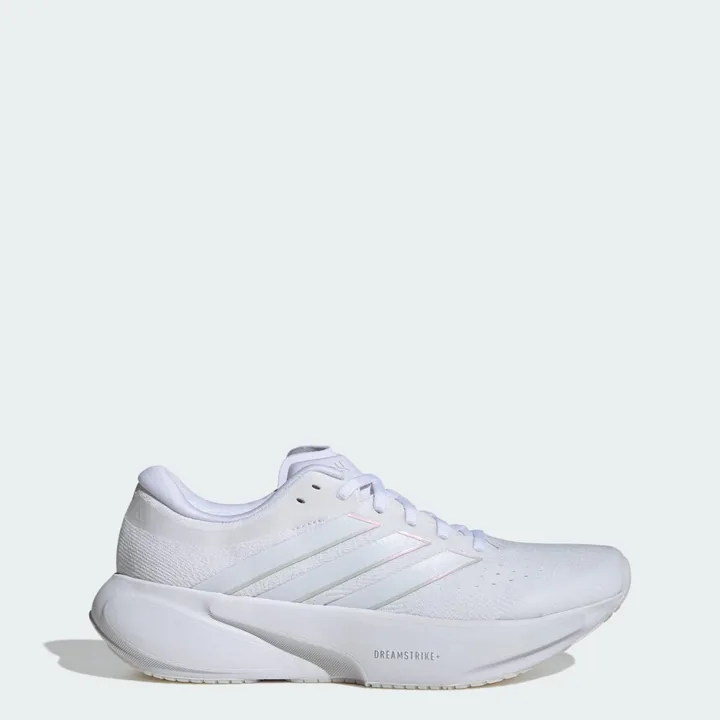
Drafted by your AI Marketer from the Adidas brand kit and product lines. Staged in Documents, not published. Example on the sample account.
AI backlinks are links to your site found and pitched by software, not by a person. The tool identifies a specific opportunity, such as a page that links to a competitor but not to you, and drafts the email you need to send to get the link. Mentionry is the AI marketing platform built for the agentic era: it sees what your customers ask AI, deploys your AI Marketer to find and pitch the opportunities, and measures the results. It does not place, publish, or promise links. It sends the pitch from your own connected mailbox, and whether a link appears is someone else's decision.
What it refuses to do
It will not find you a paid placement
“This reply asks for payment in exchange for a link. I will not write that response.”
It will not say a page is unlinked when it could not read it
“Unchecked: this page returned 403 and was not read.”
It will not send from a domain of ours
“No mailbox connected. Three drafts are ready and none of them has been sent.”
على هذه الصفحة6 قسم
What an AI backlink tool actually does
An AI backlink tool automates two parts of the process: finding where a link could go, and writing the message to ask for it. It does not automate the decision of the person who owns the page. No tool can put a link on someone else's site without that person's consent.
The finding step typically involves analyzing your competitors' backlink profiles to see who links to them but not to you. It may also search for resource pages, listicles, or directories in your niche. Some tools scan platforms where journalists ask for sources or where podcasts book guests.
The writing step involves generating a personalized outreach email based on the specific opportunity. The best tools judge whether an opportunity is a genuine fit for your business before drafting anything. They can refuse to draft a pitch if the business cannot honestly answer the query or if the opportunity asks for payment in exchange for a link.
How the market works and what it costs
The market divides into software you run yourself and done-for-you services that commit to outcomes. The software model charges a monthly fee for access to the tool. The service model often charges per placement or per month for a promised number of links.
Respona sells placements on a pay-per-result basis. Its published pricing starts at $100 for a placement on a publisher with a Domain Rating of 20 or higher. The price rises to $500 for a placement on a DR 60+ site. This fee includes content creation, outreach, and publishing, with the client choosing the anchor text and target URL.
Backlinker.ai is a done-for-you outreach service. Its Standard plan costs $300 per month and commits to delivering three or more links from domains with a DR of 30 or higher, with a money-back offer if that number is not met. The service states it works through platforms like Featured.com and Help a B2B Writer. Featured.com's own Pro plan is $79 per month, and Help a B2B Writer is free.
The risk in buying links
Google's link spam policy is explicit. Exchanging money, goods, or services for a link that passes ranking signals is a violation. The policy names buying links directly. The penalty for this violation is applied to the site being linked to, not the seller.
The compliant alternative is to add a rel="sponsored" or rel="nofollow" attribute to the paid link. This tells search engines not to pass ranking signals through it, which removes the primary benefit people are paying for. Most paid placement services do not add these attributes unless asked, because doing so defeats the purpose from the buyer's perspective.
People still buy links because the short-term math can look compelling. A one-time fee for a link from a high-authority site seems cheaper than the ongoing cost of content creation and outreach. The risk is deferred. A manual penalty can remove a site from search results, but it is not applied instantly or universally. This creates a market.
How to judge a provider
First, distinguish between a tool and a service. A tool gives you control over the process and the messaging. A service takes that control away in exchange for a promised result. Decide which model you want.
For a service that promises placements, ask where the links will come from. If the vendor uses third-party platforms like Featured.com, you can check the cost of those platforms yourself. Ask if the links will have the sponsored or nofollow attribute. Ask who writes the content and what quote will be attributed to you. In one published case study, 102 of 117 links came from a single platform the client could have accessed directly for $79 a month.
For a tool, check what it connects to. Some require you to provide API keys for search engines or data providers. Mentionry uses nine keyless connectors, so you connect no accounts and supply no keys. The only required connection is your own mailbox, which is where the outreach is drafted and sent from. Check how it filters opportunities. A volume metric is less important than a quality filter. In a measured run for one domain, Mentionry read 110 openings, judged 40, and kept 14 for drafting.
What Mentionry does differently
Mentionry is the AI marketing platform built for the agentic era: it sees what your customers ask AI, deploys your AI Marketer to find and pitch the opportunities, and measures the results. Nothing here is promised. It finds specific, individual opportunities where a link could be earned, and it drafts the email you need to send to ask for it. The email is sent from your own connected mailbox, using your address, your domain, and your sending reputation. Replies land in your inbox.
Mentionry finds places a brand could appear next. These include journalist requests that match its expertise, podcasts booking guests, conferences taking speakers, awards taking entries, pages that cite competitors and not the brand, and articles that name it without linking. It also records what AI answer engines like Google AI Overviews say about the brand every day.
Every opportunity is judged individually by a model that can refuse to draft. It will decline to pitch for an award that has closed or if your business cannot honestly answer a journalist's query. Given a reply asking for payment for a link, the drafting model will decline and explain why. Paid placements are excluded by design.
Mentionry verifies links after the fact. Every pitched opportunity is checked to see if a link appeared, on which page, with what anchor text, and whether it is still there. A link that is later removed or turned nofollow shows as a change in the report. This is how the product reports what it earned, not how many emails were sent.
What is not built
Mentionry does not maintain registries or datasets of linkable sites. It does not do broken link building. It does not inventory your relationships with vendors, partners, or customers. It does not audit your existing anchor text.
It does not automatically pull in queries from HARO, Source of Sources, or Connectively. All three platforms work and are separate. You can paste a query from any of them into Mentionry, and it will be judged and drafted like any other opening. The tool does not read your mailbox or log into those platforms on its own.
The AI answer visibility tracking covers Google AI Overviews only. It does not track visibility in ChatGPT or Perplexity. Recording starts the day a prompt is added. There is no historical backfill. A day when every run failed is shown as a gap in the chart, not as zero visibility.
الأسئلة التي يطرحها الناس فعلاً
No. An AI backlink tool finds the opportunity and writes the pitch. The act of sending the pitch is automated, but the placement is not. The link only appears if the recipient decides to add it. Services that sell placements are different. They commit to getting a link on your behalf, often by paying the publisher or providing content. Google's spam policy treats buying links that pass ranking signals as a violation.